


Pelle hydraulique CAT 336E d'occasion ou 336D2 : quelle pelle lourde offre le meilleur retour sur investissement en 2026 ?
Release time: 2026-02-04
Let’s be real for a second. If you are in the market for a 36-ton beast, you aren’t just looking for shiny yellow paint. You are looking for dirt-moving power that won’t eat your entire profit margin in fuel costs.
For years, the debate in the heavy machinery world has centered around two heavyweights: the legendary D-Series (specifically the 336D2) and its high-tech successor, the E-Series.
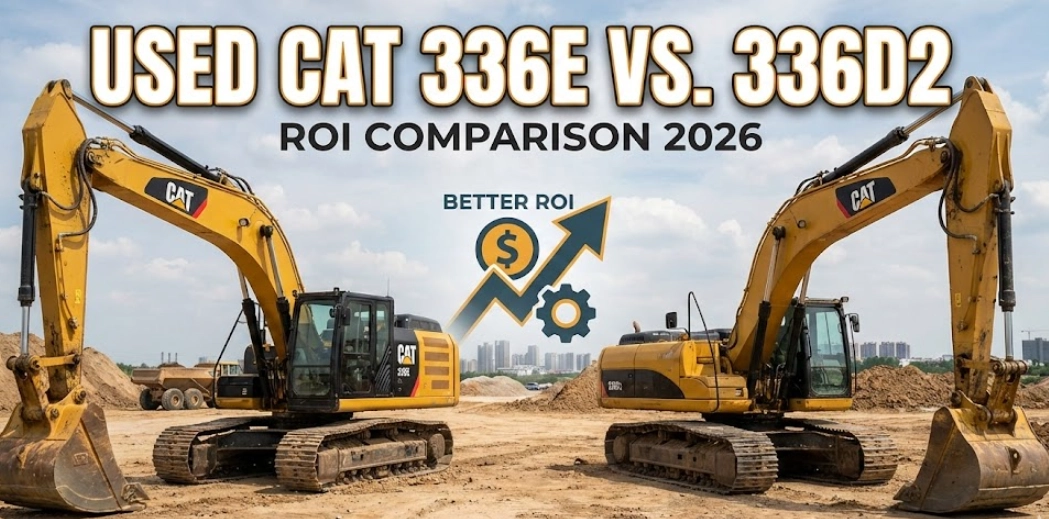
As we move into 2026, the market for the used CAT 336E excavator has matured. Prices have stabilized, making it a tempting option against the older, mechanical reliability of the D2. But which one actually puts more money back in your pocket?
I’ve spent a decade watching these machines roll out of the yard and onto job sites. Here is my honest, no-nonsense take on the ROI (Return on Investment) battle between these two iron giants.
The Core Difference: Tech vs. Guts
Before we talk money, we have to talk about what’s under the hood.
The CAT 336D2 is often called the “last of the simple beasts.” It runs on a C9 engine that is mechanically robust. It’s known for being tolerant of lower-quality fuel—a huge plus if your projects are in remote regions with a sketchy diesel supply.
The used CAT 336E excavator, on the other hand, was Caterpillar’s leap into the future. It’s powered by the C9.3 ACERT engine. It’s smarter, quieter, and designed to meet stricter emissions standards. But does “smarter” mean “better” for your wallet?
1. Fuel Efficiency: The 336E’s Secret Weapon
This is where the E-Series starts to pull ahead.
If you are running a machine for 8-10 hours a day, fuel is your biggest variable cost. The used CAT 336E excavator utilizes an electric regeneration system that captures energy during the swing brake and lowers the boom.
In real-world terms? The 336E can be 10-15% more fuel-efficient than the 336D2 in standard “Economy” mode.
Let’s do the math. If you are saving 3-4 liters of diesel per hour, over the course of a 2,000-hour work year, that is a massive chunk of change saved. If your project is in a region with high fuel prices, the 336E pays for its slightly higher purchase price just in fuel savings within the first 18 months.
2. Performance and Speed
I’ve spoken to dozens of operators who have switched from the D to the E series. The feedback is consistent: The 336E feels “snappier.”
The hydraulic system in the E-series manages pressure more intelligently. It doesn’t just blast power everywhere; it sends it exactly where you need it. This means faster cycle times.
If you are paid by the truckload or by the cubic meter, speed is everything. A second-hand CAT 336E excavator allows your operator to move more dirt in less time compared to the D2. Higher productivity = Higher ROI.
3. The “Headache Factor”: Maintenance and Durability
Here is where the 336D2 usually fights back.
The D2 is famous because you can fix a lot of it with a wrench and a hammer. It has fewer sensors and less complex electronics than the E-series. For buyers in areas with limited access to specialized technicians or diagnostic laptops, the D2 is still the safer bet.
However, the fear of maintaining a used CAT 336E excavator is largely outdated in 2026.
- Parts Availability: E-series parts are now everywhere.
- Diagnostics: Most modern mechanics are now fully equipped to handle the C9.3 engine.
- Build Quality: The E-series has a reinforced heavy-duty boom and stick. We’ve seen fewer structural cracks in high-hour E-series machines compared to older generations.
Pro Tip: If you are buying a used 336E, just make sure to check the DPF (Diesel Particulate Filter) history. A well-maintained DPF is fine; a neglected one is a bill you don’t want.
4. Resale Value in 2026
When you are done with the machine, how much can you get back for it?
Currently, the market demand is shifting. While the D2 is still a king in specific export markets (like parts of Africa and the Middle East), the global trend is moving toward cleaner, more efficient machines.
A well-maintained second-hand CAT 336E excavator is holding its value incredibly well because it strikes the perfect balance: it’s modern enough to be efficient, but it lacks the overly complicated electronics of the newest “Next Gen” models that some old-school mechanics hate. It is the “Goldilocks” of the used market right now.
The Verdict: Which One Should You Buy?
So, which one delivers the better ROI? It depends entirely on your job site.
Choose the CAT 336D2 if:
- You work in extremely remote areas with poor fuel quality.
- You don’t have access to electronic diagnostic tools.
- You need a “simple” machine that just runs, regardless of emissions.
Choose the used CAT 336E excavator if:
- Fuel costs matter to you. (The savings are undeniable).
- You want faster cycle times to finish projects quicker.
- You want a machine that offers a more comfortable cabin for your operators (happy operators work harder).
- You want better resale value in the long run.
Final Thoughts
In 2026, for 80% of our clients, the used CAT 336E excavator is the smarter buy. The fuel savings alone make it the ROI winner.
But don’t just take my word for it. The quality of a used machine depends heavily on how it was treated by its previous owner. You need to see the maintenance logs, check the undercarriage, and listen to that engine purr.
Looking for a quality-inspected CAT 336E? We don’t just sell machines; we test them. Browse our inventory of inspected excavators or drop us a message to get a video walkthrough of our current stock. Let’s get your fleet moving.

